

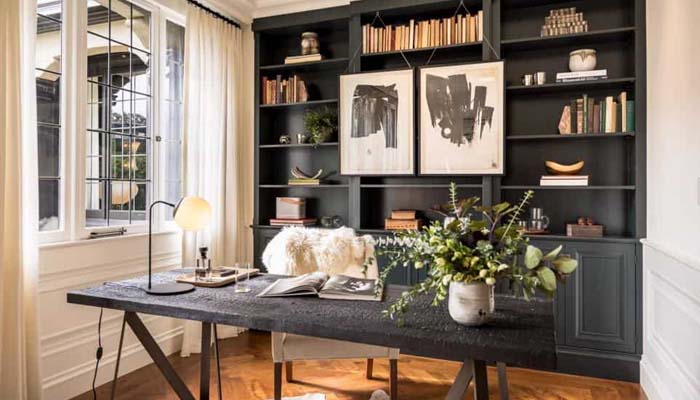
Small home office ideas can help you create a productive, comfortable workspace without needing a separate room. By choosing space-saving furniture, smart storage, proper lighting, and an ergonomic setup, even a small corner of your home can become an efficient office. The best designs focus on functionality first while keeping the space organized and visually appealing.
| Fast Info | Details |
| Topic | Small Home Office Ideas |
| Best For | Remote workers, students, freelancers, entrepreneurs |
| Ideal Space | Bedroom, living room, closet, hallway, under stairs, corner |
| Recommended Desk | Floating, fold-down, corner, or compact desk |
| Storage Options | Floating shelves, wall cabinets, drawers, pegboards |
| Best Lighting | Natural light with a quality desk lamp |
| Recommended Colors | White, beige, light gray, sage green, soft blue |
| Main Goal | Maximize productivity while saving space |
Choose the Right Location and Furniture
The first step in creating a functional workspace is selecting the right location. You don’t need an extra room. Many successful home offices fit neatly into unused corners, alcoves, closets, or even under staircases. The goal is to make the most of available space without disrupting the rest of your home.
Compact furniture is essential for small home office ideas. Floating desks, fold-down desks, and narrow writing desks provide enough workspace while keeping the room open. If more than one person works from home, a compact double workstation or corner desk can make shared spaces more practical.
Make Storage Work Smarter
Storage is one of the biggest challenges in a small office. Instead of adding bulky cabinets, use vertical space to keep supplies organized. Floating shelves, pegboards, and wall-mounted organizers provide extra storage without taking up valuable floor space.
Keep everyday items within easy reach while storing less-used supplies in drawers or decorative storage boxes. Cable organizers, file holders, and rolling carts also help reduce clutter. A clean workspace improves focus and makes daily work more efficient.
Improve Comfort with Good Lighting and Ergonomics
Comfort directly affects productivity. Whenever possible, place your desk near a window to take advantage of natural daylight. If natural light is limited, use a desk lamp that provides even lighting without creating screen glare.
An ergonomic setup is equally important. Choose a supportive chair, position your monitor at eye level, and keep your keyboard and mouse at a comfortable height. Maintaining good posture throughout the day can reduce fatigue and improve concentration during long work sessions.
Create a Space That Feels Larger and More Inviting
Light colors can make a compact office feel more spacious. Shades such as white, soft gray, beige, and light green reflect more light and create an open appearance. Keeping decorations simple also prevents the workspace from feeling crowded.
Add personality with a few carefully selected accessories. A small plant, framed artwork, or a bulletin board can make the office more enjoyable without creating unnecessary distractions. Choosing furniture with built-in storage also helps maintain a neat appearance.
Stay Organized for Long-Term Productivity
A productive office requires regular organization. Spend a few minutes each day clearing unnecessary papers, organizing cables, and returning supplies to their proper places. Simple habits can prevent clutter from building up over time.
Flexible furniture can also support changing needs. Foldable desks, movable storage carts, and adjustable shelves allow your workspace to evolve as your work requirements change. Investing in quality, space-saving furniture often provides better long-term value than filling a small room with oversized pieces.
Conclusion
The best small home office ideas focus on making limited space work efficiently. By selecting compact furniture, maximizing vertical storage, improving lighting, and maintaining an organized workspace, you can create a comfortable office that supports productivity every day. Even a small corner of your home can become an effective place to work with thoughtful planning. Read About More Cape Cod Home Style
FAQs
1. What is the best desk for a small home office?
Floating desks, fold-down desks, and compact corner desks are excellent choices because they save floor space while providing enough room to work.
2. How can I make a small home office look bigger?
Use light wall colors, maximize natural light, keep clutter to a minimum, and choose furniture with a slim design.
3. Where can I create a home office if I don’t have a spare room?
You can use a bedroom corner, living room, hallway, closet, under-stair space, or any unused area with enough room for a desk and chair.
4. What are the most important features of a productive home office?
Comfortable seating, good lighting, ergonomic equipment, smart storage, and an organized layout are the key elements of a productive workspace.
